Every skier asks the same question before booking a winter week: will the snow actually hold? It’s a fair worry. You commit time and money months ahead, and the mountains make no promises. So let’s answer it honestly, grounded in the thing that really drives snow reliability here: altitude. As a family that has watched these winters come and go for nearly three generations in St. Anton am Arlberg, we’d rather give you the straight version than a glossy one.
How high is the Arlberg ski area?

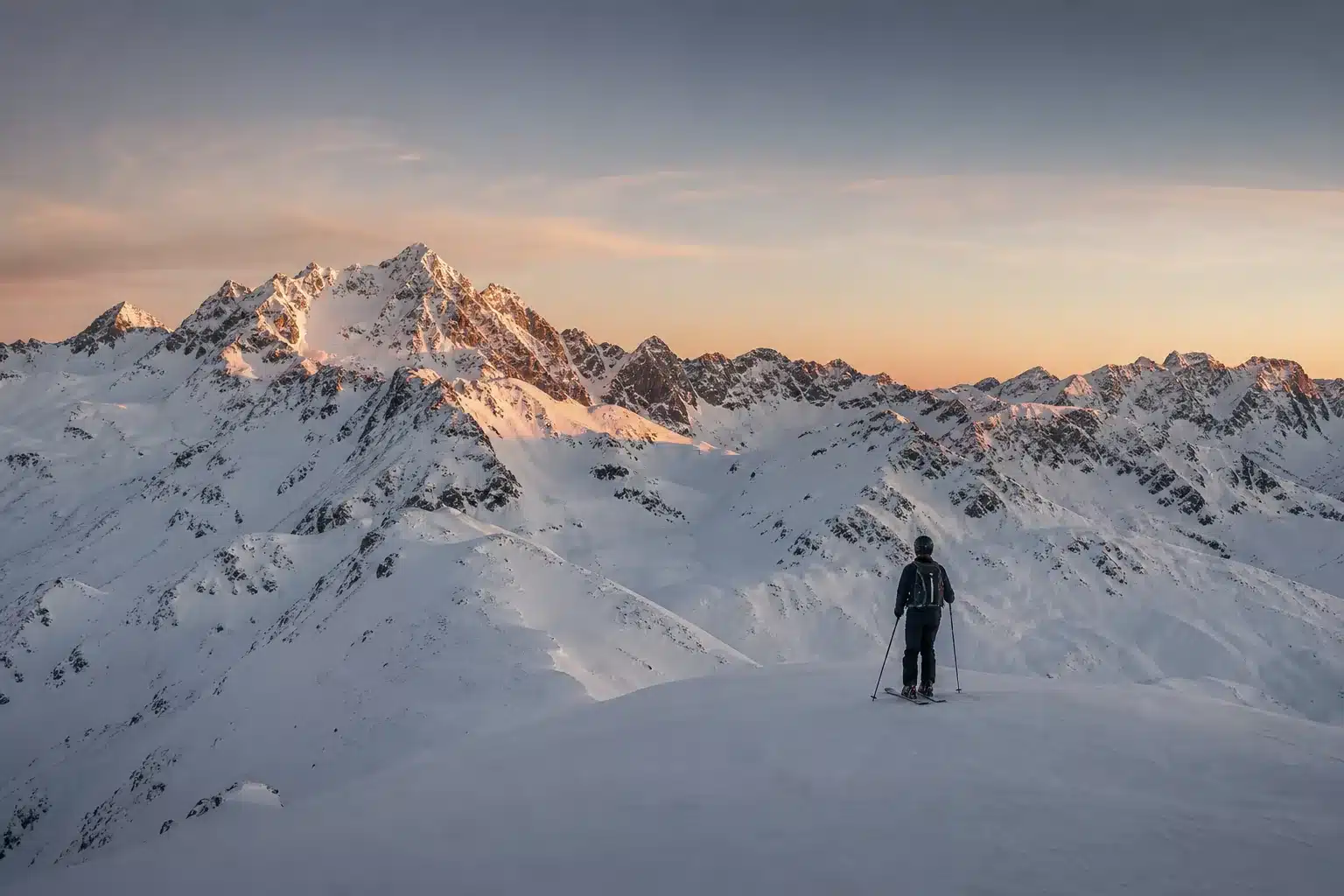
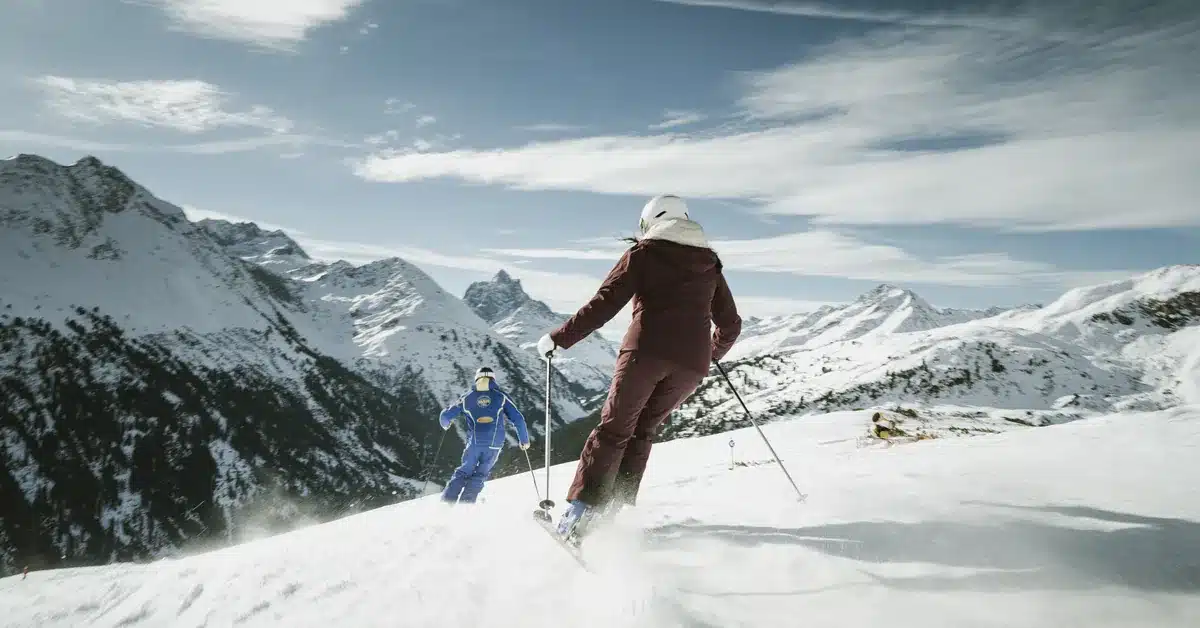
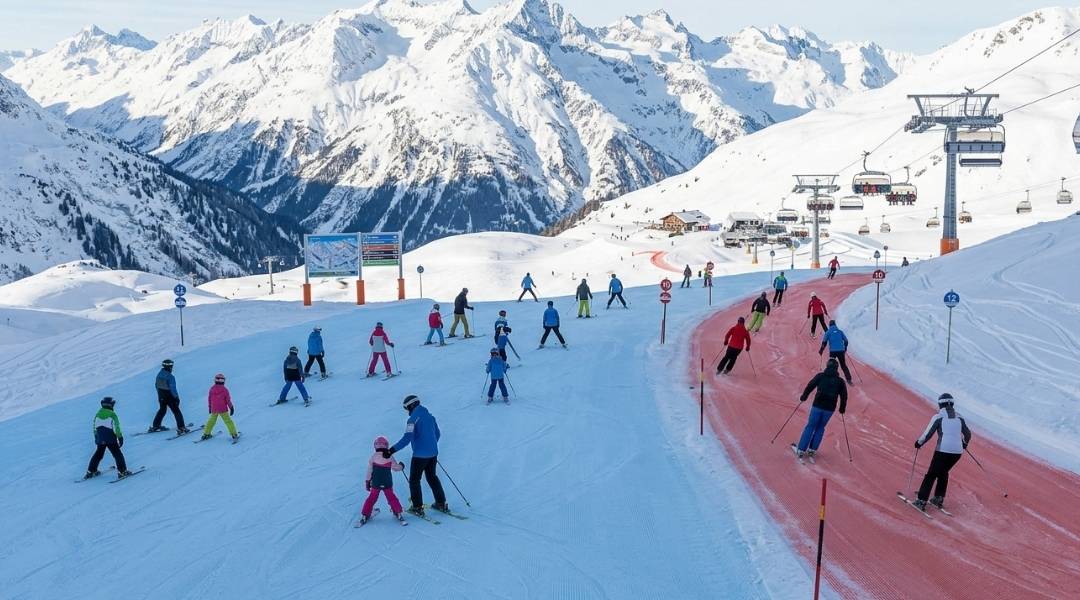
Altitude shapes everything that follows, so start here. St. Anton am Arlberg sits at roughly 1,300 metres in the valley, high enough that winter arrives early and lingers. From there the linked Ski Arlberg terrain climbs steeply. The high point above St. Anton, the Valluga, reaches around 2,800 metres, and the sectors around Kapall and Rendl give you a big vertical spread between base and summit.
Why does height matter so much? Temperature drops as you climb. Higher terrain stays colder, so precipitation falls as snow rather than rain and, just as important, stays as snow instead of melting. The line between rain and snow, and how it shifts with temperature and humidity, is something researchers study closely: an analysis of wet-bulb temperature in Global and Planetary Change shows how sensitive that threshold is to small changes in the air. On the Arlberg, the altitude of the upper mountain keeps you on the right side of that line far more often than a lower resort can.
Is the Arlberg snow-sure? The region’s snow record
Plainly: yes. The Arlberg is one of the snowiest corners of the Alps, and heavy natural snowfall is the norm in most winters. The region has long carried a reputation as a snow trap, where moist Atlantic systems pile up against the mountains and unload. That’s not marketing folklore; it’s why generations of serious skiers have made the trip.
We’ll still be honest with you, because trust matters more than a quick sale. No winter is guaranteed. Snowfall varies year to year, some seasons start slower than others, and we’ll never promise a specific snow depth on a specific date, because nobody can. What we can say is that reliable snow here comes from altitude and a well-built lift and slope network, not luck. The high-altitude western Tyrol sits among the more dependable places in the Alps to find winter conditions.
Snow reliability by altitude: valley versus high slopes

Here’s the practical part most overviews skip. A single storm behaves very differently depending on where you stand. A mild front might leave slush at valley level while dumping cold, dry powder on the upper bowls at the same moment. That gap is exactly why the high sectors of the Arlberg stretch your season on both ends: they hold an early base in December when the valley is still brown, and they keep skiable snow well into spring, long after lower runs have softened.
Even in a weaker year, the altitude buys you options up top, the Arlberg’s vertical range is what makes it resilient when lower resorts struggle.
For anyone planning a winter holiday on the Arlberg, this is the reassuring part. Even in a weaker year, the altitude buys you options up top. Snow depth and duration scale strongly with elevation across the Alps, and the Arlberg’s vertical range is what makes it resilient when lower resorts struggle.
When is the snow best, and when to be flexible?

| Period | What to expect |
|---|---|
| December | The build-up phase. Cold settles in and the base grows, with the highest slopes usually skiing well before the lower ones fill in. |
| January & February | The heart of deep winter. This is when you get the most reliable cover, the coldest snow and the best chance of powder days across the whole mountain. |
| March | Spring skiing at its finest on the high, snow-holding terrain, with softer afternoons lower down. |
So when should you stay flexible? Watch the shoulder edges. The very start of the season and the tail end of April can be hit or miss on the lower runs, and warm spells soften south-facing slopes by afternoon. That’s not a reason to stay home; it’s a reason to aim your trip at the reliable core, roughly December through April, the same stretch that defines St. Anton and our own house. And because we run on freedom rather than fixed routines, with no strict meal times, you ski the mountain’s schedule and eat when you come down, not when a dining-room bell says so.
Where to find the best snow in St. Anton

If you want snow that lasts, follow the aspect and the altitude. North-facing, high-elevation runs stay cold and keep their quality longest, holding good conditions for days after a storm when sunnier slopes have gone heavy.
St. Anton also has a genuinely legendary deep-snow reputation, a place confident skiers travel to for its off-piste and open powder terrain. If that’s your reason for coming, read up on freeriding the Arlberg’s famous off-piste before you go, and Dutch-speaking visitors can find the same gids voor freeriden op de Arlberg in their own language. Please treat the backcountry with respect: check the daily avalanche bulletin from the regional service, carry the right equipment, and hire a local guide if you’re unsure.
What is the best ski resort in the Arlberg?
This gets asked a lot, and the fairest answer is a small reframe. The Arlberg isn’t a single resort but one huge linked ski area spanning St. Anton, St. Christoph, Stuben, Lech, Zurs and Warth-Schrocken, all on one ticket. So “best” depends on what you want. Quiet cruising pulls people one way; big terrain, atmosphere and challenge pull them another.
St. Anton is the snow-sure, big-mountain heart of it: serious vertical, a famous freeride pedigree and a lively village at the end of the day. If your idea of a great ski week is demanding terrain and dependable snow, this is where you want your base.
Staying in the heart of it: your base in St. Anton am Arlberg
When the snow is this good, where you sleep decides how much of it you actually ski. A base close to the lifts means more time on the mountain and less time in transit, which is the whole point of a ski week.
That’s where we come in. Hotel Die Arlbergerin is a genuinely family-run house, a third-generation business proudly led by the women of the family, with nearly a hundred years of Tyrolean hospitality behind it. The name itself reflects that feminine soul of the region. We’re not a chain: Grandma still prepares breakfast, the family works hand in hand alongside our international team, and the whole place is built around your comfort rather than a rigid routine. We bring several experiences together in one spot: a cozy hotel, a relaxed B&B for skiers who want an authentic guesthouse feel, and a private chalet for up to 30 guests, ideal for families and groups. Rooms run from warm, budget-friendly options to elegant design suites, with flexible dining across our bistro, bar and two restaurants. Whether you’re after a hotel in St. Anton am Arlberg, a friendly pension, or a Frühstückspension with a proper Tyrolean breakfast, you’ll find your fit here. Time simply runs differently with us: you ski your day your way and come home to a real family.
Frequently asked questions
Is the Arlberg snow-sure?
How high is the Arlberg ski area?
When should you avoid skiing in St. Anton?
What is the best month for snow in St. Anton?
What is the best ski resort in the Arlberg?
Plan your ski week
The snow record here is genuinely on your side. The only piece left to sort is where you’ll stay, and getting that right is what turns a good trip into the one you talk about all year.