Paragliding in St. Anton am Arlberg summer has quietly become one of the region’s most memorable warm-season experiences. While the destination is widely known for winter skiing, the landscape transforms in summer into a high-altitude playground where thermals lift gliders over emerald valleys and rugged Tyrolean peaks.
This guide explores how paragliding works in St. Anton am Arlberg, where flights launch, what conditions pilots rely on, what the experience feels like, and how to plan a stay in the area so the flight becomes part of a broader Alpine holiday.
Paragliding in St. Anton am Arlberg Summer
Paragliding in St. Anton am Arlberg summer draws visitors who want more than a standard mountain holiday. The region sits in the heart of Austria’s Tyrolean Alps, where warm air currents rise from green valleys toward steep ridges. These thermals create ideal conditions for recreational flight.
A tandem paragliding flight begins high above the village. A trained pilot prepares the wing, checks wind direction, and gives a short briefing before take-off. After a short run across an alpine slope, the canopy inflates and lifts both pilot and passenger into open air. From that moment, the landscape unfolds beneath you: winding hiking paths, forested ridges, and distant glacier-carved summits.
Summer flight conditions in St. Anton often prove stable because the surrounding mountains create predictable wind patterns. According to the Austrian Aeroclub, thousands of recreational paragliding flights take place in the country each year, particularly in alpine regions where terrain allows safe launches and wide landing zones.
The experience lasts between ten minutes and half an hour, depending on thermals and flight style. Pilots often guide the wing across gentle air currents to extend flight time. For many visitors, paragliding in St. Anton am Arlberg summer becomes the highlight of their entire trip.
Why St. Anton am Arlberg Is One of Austria’s Best Summer Paragliding Destinations
Several geographic factors place St. Anton among the best Alpine locations for recreational paragliding. The village sits at roughly 1,300 meters above sea level, surrounded by mountain peaks exceeding 2,500 meters. This elevation difference allows pilots to launch from high slopes while landing safely in the valley.
The surrounding mountain systems, including the Verwall and Lechtal Alps, produce rising air currents that gliders depend on. Warm air from sunlit valleys rises throughout the day, forming thermals that allow longer flights.
Another reason pilots favor this region is visibility. On clear summer days, a glider can drift across ridgelines with uninterrupted views of Tyrol’s alpine terrain.
The scenery becomes part of the experience itself. From above, the village appears small against a vast mountain amphitheater. Rivers weave through valleys, hiking routes trace the slopes, and alpine huts dot distant ridges.
Tourism data shows that the wider Arlberg region offers more than 300 kilometers of marked hiking routes and numerous mountain lifts operating in summer, which means visitors already travel into high alpine terrain before launching flights.
That combination of altitude, weather patterns, and scenic scale explains why paragliding in St. Anton am Arlberg summer continues to grow in popularity.
Best Paragliding Launch Sites Around St. Anton
Most tandem flights launch from elevated slopes above the village. Lift systems allow easy access to these launch points, reducing the need for difficult climbs.
| Launch Site | Approx. Elevation | Flight Characteristics | Typical Landing Area |
| Kapall | 2,330 m | Panoramic flights with wide valley views | St. Anton valley floor |
| Gampen | 1,850 m | Smooth beginner flights | Meadows near Nasserein |
| Valluga region | 2,811 m | Advanced scenic routes | Valley landing zones |
Kapall is widely considered the most scenic launch location. From this point, gliders drift above forested slopes and wide alpine valleys. Gampen offers slightly shorter flights but often calmer air conditions.
Pilots select launch points based on wind direction and weather patterns. The aim is always to ensure stable airflow and safe landing areas.
Types of Paragliding Flights Available in St. Anton
Visitors can choose between several flight styles depending on their experience level and weather conditions.
| Flight Type | Duration | Experience Level | Typical Price Range |
| Tandem panoramic flight | 10–15 minutes | Beginner | €170 – €220 |
| Thermal flight | 20–30+ minutes | Beginner with stable weather | €220 – €280 |
| Extended scenic flight | up to 40 minutes | Moderate thermals | €280 – €340 |
Note: Price and flying timing depend on the provider.
Most travelers opt for tandem flights with licensed pilots. These flights require no previous training. The pilot handles navigation and landing while the passenger simply enjoys the view. Adventure platforms that list Alpine activities confirm that tandem flights in St. Anton typically fall within this price range, depending on weather and duration.
Best Time for Paragliding in St. Anton am Arlberg Summer
Weather plays a decisive role in paragliding. Summer offers the most reliable conditions for flights in St. Anton am Arlberg.
Morning air tends to remain calm, which allows smooth introductory flights. As the sun warms mountain slopes, thermals develop. These rising air currents help extend flight duration and allow gliders to gain altitude.
Midday and early afternoon usually produce the strongest thermals. Pilots often plan longer scenic flights during this period.
Wind direction also matters. Pilots evaluate valley winds before every launch to ensure a safe take-off path and predictable landing conditions.
The summer months between June and September typically offer the best opportunities for paragliding in St. Anton am Arlberg because the region experiences stable high-pressure weather systems.

Paragliding Weather Conditions Explained
Weather plays a crucial role in paragliding in St. Anton am Arlberg summer. Even on clear days, pilots analyze wind direction, thermal strength, and atmospheric stability before launching a flight. The mountainous terrain around St. Anton creates unique air patterns that experienced pilots rely on to ensure safe and enjoyable flights.
Warm summer sunshine heats the alpine slopes and valleys throughout the morning. As the ground temperature rises, warm air begins to lift upward. These rising air columns, known as thermals, allow paragliders to gain altitude and extend their flight time.
The most reliable conditions usually appear between late morning and early afternoon. During this period, thermals become stronger and more predictable, allowing pilots to glide longer distances above the valley.
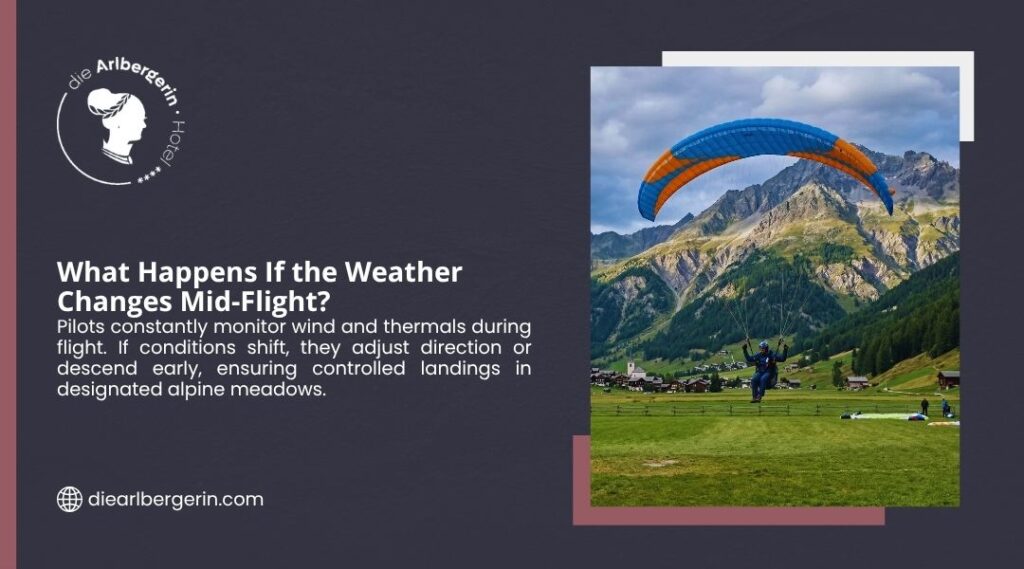
However, strong valley winds or sudden weather changes can affect flight plans. Professional tandem pilots monitor wind speeds carefully and only proceed when conditions remain stable.
| Weather Factor | Why It Matters for Paragliding |
| Thermal activity | Determines how long a glider can stay airborne |
| Wind direction | Ensures safe launch and landing |
| Cloud formation | Indicates thermal strength and air stability |
| Valley wind | Influences the flight path and landing approach |
Because weather conditions in the Alps can shift quickly, flexibility becomes an important part of the experience. Pilots often adjust launch times slightly during the day to catch the best thermal windows.
Understanding these weather patterns helps explain why paragliding in St. Anton am Arlberg summer remains one of the most thrilling ways to experience the Tyrolean Alps from above.
What to Expect During a Paragliding Experience
First-time participants often wonder how the flight unfolds. The experience follows a simple sequence.
| Stage | What Happens |
| Arrival | Meet the pilot and travel to the launch site |
| Safety briefing | The pilot explains the harness and take-off process |
| Launch | Short run across slope until canopy lifts |
| Flight | Glide across valleys and mountain ridges |
| Landing | Gentle landing on the valley meadow |
The launch moment usually surprises newcomers. After only a few steps forward, the wing fills with air, and the ground quietly drops away. Within seconds, the pilot guides the glider into open air currents.
From there, the flight becomes peaceful. The wing moves smoothly, and the conversation with the pilot continues during the glide.
Safety Standards and Requirements
Paragliding in Austria follows strict aviation and safety regulations. Pilots must hold recognized certifications and maintain regular training standards. Weight limits typically range between 40 and 110 kilograms, depending on equipment. Weather conditions determine whether flights proceed on a given day.
Professional tandem pilots monitor wind speed, thermal strength, and cloud formation. If conditions become unstable, flights simply pause until safe conditions return. These standards ensure that paragliding in St. Anton am Arlberg summer remains a controlled and professionally supervised activity.
How Much Does Paragliding Cost in St. Anton
Pricing varies based on flight duration and weather conditions.
| Experience | Average Cost |
| Short tandem flight | €110 – €160 |
| Scenic thermal flight | €200 – €260 |
| Extended flight | €260 – €340 |
Photo or video packages sometimes add additional cost (€30 – €40), but many visitors choose them to capture the aerial views of the Tyrolean Alps.
How to Prepare for Your Flight
Preparation for paragliding in St. Anton am Arlberg summer requires only basic planning. Comfortable outdoor clothing works best. Hiking shoes provide grip during the short launch run.
Pilots supply helmets and harnesses. Sunglasses help reduce glare during flight because sunlight reflects strongly from alpine slopes. Visitors should also remain flexible with scheduling. Weather patterns in the mountains can change quickly, which means pilots occasionally adjust flight times.
Where to Stay for Easy Access to Paragliding
Accommodation plays a role in how smoothly the experience unfolds. Staying near lift stations and transport routes simplifies access to launch sites.
Many travelers prefer a boutique alpine hotel that balances comfort with a relaxed atmosphere. Guests who stay at a family-run mountain retreat near the village often appreciate easy access to summer lifts and outdoor activities. Travelers can explore the accommodation options at Hotel Die Arlbergerin, where the setting offers both quiet surroundings and proximity to the village center.
Those seeking a traditional alpine stay sometimes choose a historic guesthouse. The charming Pension Der Steinbock offers a different style of accommodation rooted in Tyrolean heritage.
Groups traveling together may prefer a private mountain residence. A spacious alpine chalet in St. Anton, such as the exclusive chalet option, allows friends or families to stay together while planning outdoor adventures. These options allow visitors to organize summer activities while enjoying local hospitality.
Other Summer Adventures to Combine With Paragliding
After experiencing paragliding in St. Anton am Arlberg summer, many travelers discover that the region offers far more than one aerial adventure. The surrounding mountains open up a wide range of warm-season activities, making it easy to fill several days with outdoor exploration.
| Activity | What Makes It Special in St. Anton |
| Alpine hiking | Over 300 km of marked trails connect valleys, ridges, and panoramic viewpoints across the Arlberg region. |
| Mountain biking | Lift-assisted routes and natural alpine trails attract riders seeking scenic descents and technical terrain. |
| Via ferrata climbing | Secured climbing routes allow visitors to explore vertical alpine rock faces safely. |
| Mountain lake visits | Crystal-clear alpine lakes provide quiet resting spots after high-altitude hikes. |
| Scenic lift rides | Summer lift operations transport visitors high into the mountains for panoramic views and trail access. |
Many visitors plan their day around these activities before returning to the village in the evening. Local terraces and restaurants become popular gathering spots where travelers share stories from their day in the mountains and prepare for the next adventure in St. Anton am Arlberg.
FAQs About Paragliding in St. Anton am Arlberg Summer
Is paragliding in St. Anton am Arlberg suitable for beginners in the summer?
Yes. Most flights are tandem experiences where a certified pilot controls the glider. Passengers only need to follow simple instructions during take-off and landing, which makes paragliding accessible even for first-time participants.
How long does a paragliding flight in St. Anton last?
Flight duration usually ranges from 10 to 30 minutes, depending on thermal conditions and the type of flight selected. Thermal flights may last longer if rising air currents allow the glider to gain altitude.
Do you need experience to paraglide in St. Anton?
No previous experience is required for tandem flights. The pilot manages navigation and landing while passengers enjoy the aerial views of the Arlberg region.
What should you wear for paragliding in St. Anton am Arlberg in the summer?
Comfortable outdoor clothing and sturdy shoes are recommended. Even in summer, temperatures can feel cooler at higher altitudes, so a light jacket is often helpful during the flight.

Is paragliding safe in the Alps?
When conducted with licensed operators and under suitable weather conditions, paragliding is considered a safe recreational activity. Pilots carefully evaluate wind speed, thermal strength, and visibility before every launch.
See St. Anton From the Sky
Paragliding in St. Anton am Arlberg summer offers a perspective few travelers forget. The experience combines gentle flight with extraordinary alpine scenery. Above the village, silence replaces noise. Forests stretch toward distant peaks, and the valley opens beneath the glider’s path.
Many visitors arrive expecting a typical mountain holiday and leave with a story about their first flight across the Alps.
Those planning a summer visit often start by exploring accommodation options in the village, especially welcoming alpine hotels where outdoor adventures remain close at hand. Travelers who want to experience the region fully can discover more about summer stays and activity planning through the welcoming team at Die Arlbergerin, a place where guests often begin their exploration of St. Anton’s mountains.
Because once you have seen the Alps from the sky, the memory tends to linger long after the journey ends.