Traditional Tyrolean food to try in St. Anton reflects the rhythm of mountain life, simple, filling, and shaped by generations. This guide looks at what people actually eat here, where to find it, and why it still matters.
Traditional Tyrolean Food to Try in St. Anton
Traditional Tyrolean food to try in St. Anton isn’t something created for tourists. It existed long before ski lifts, long before après-ski crowds. What you see on menus today comes from a time when food had one job: keep people going.
That’s why dishes feel substantial. Potatoes show up everywhere. So do cheese, cured meat, and flour. Nothing fancy, but it works. And over time, these basics turned into something recognizable as Tyrolean cuisine.
In St. Anton am Arlberg, this food still feels connected to its surroundings. You notice it more after a day outside. Cold air, long hours, then a plate that actually satisfies you. That’s where traditional Tyrolean food to try in St. Anton starts to make sense.
What Makes Tyrolean Cuisine Unique in St. Anton am Arlberg
Here’s the thing. Tyrolean cuisine didn’t develop because chefs wanted variety. It developed because people had limited options.
Winters were long. Fresh ingredients didn’t last. So people preserved what they could: meat, dairy, and vegetables. Over time, that necessity shaped flavour.
Even now, you’ll see traces of that mindset. Meals lean toward hearty combinations. Cheese with bread. Meat with potatoes. Dumplings in broth. It’s practical, but it’s also comforting.
Tourism changed some parts of the dining experience, sure. But not everything. According to the Austrian National Tourist Office, cuisine forms an important part of Austria’s tourism appeal, alongside its Alpine landscapes and cultural heritage. That lines up with what happens in St. Anton am Arlberg, people come for skiing, but they remember the food.
Most Popular Traditional Tyrolean Dishes You Must Try
Some dishes come up again and again when people talk about traditional Tyrolean food to try in St. Anton. Not because they’re fashionable, but because they’ve stood the test of time. These recipes carry history, shaped by mountain life and passed down through generations.
| Dish | Description | Best Time to Eat | Where to Try |
| Tiroler Gröstl | Fried potatoes, beef, onions, usually topped with egg | Midday meal | Mountain huts |
| Kaiserschmarrn | Torn pancake with sugar and fruit | Afternoon | Ski lodges |
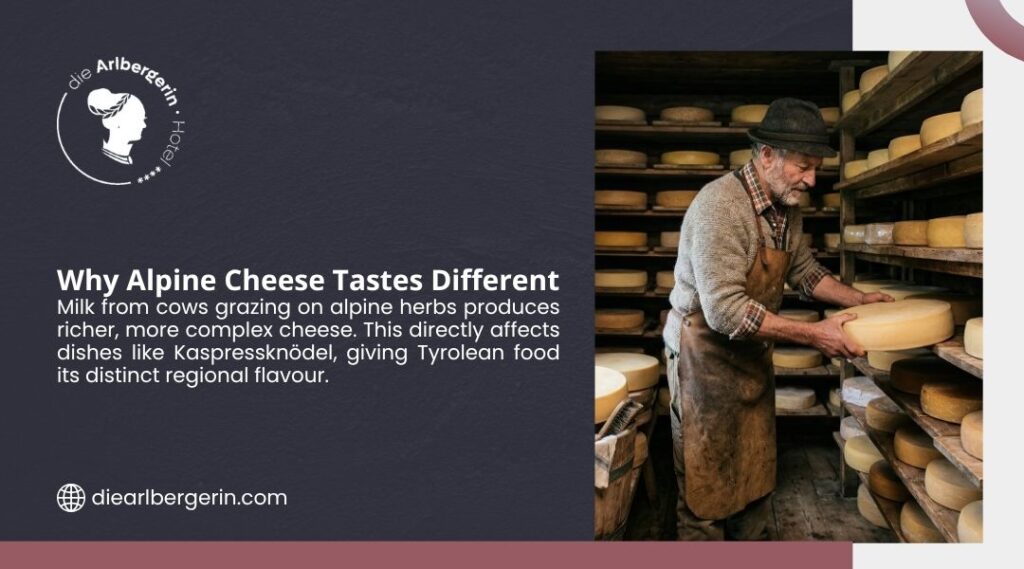
| Kaspressknödel | Flattened cheese dumplings, often in soup | Light lunch | Traditional inns |
| Speckplatte | Cured meats with bread and pickles | Snack | Rustic taverns |
| Schlutzkrapfen | Filled pasta with spinach and cheese | Dinner | Local kitchens |
| Germknödel | Sweet dumpling with plum filling | Dessert | Alpine huts |
There’s no rush when eating these. That’s part of it. Meals tend to stretch out, especially when you’re not in a hurry to get anywhere.
1. Tiroler Gröstl
Tiroler Gröstl is one of the most recognisable plates in Tyrolean cuisine, created as a way to reuse leftover meat. It combines boiled potatoes, beef or pork, onions, and butter, all pan-fried until crisp. A fried egg usually sits on top, slightly runny.
The dish comes from rural Tyrol, where nothing went to waste. Farmers used what remained from previous meals and turned it into something hearty. Preparation is simple but relies on timing; ingredients must crisp without burning.
What makes it stand out is the balance between texture and flavour. The potatoes absorb fat from the meat, while onions add sweetness. After skiing, it feels exactly right.
| Aspect | Details |
| Key Ingredients | Potatoes, beef or pork, onions, butter, egg |
| Origin | Rural Tyrol, Austria |
| Cooking Style | Pan-fried |
| Why It Works | Filling, rich, and perfectly suited for cold weather |
| Rating | 9.5/10 |
2. Kaiserschmarrn
Kaiserschmarrn sits somewhere between dessert and main dish. It’s a thick pancake, torn into pieces during cooking, dusted with powdered sugar, and served with fruit compote, usually plum or apple.
The name traces back to Emperor Franz Joseph I, who reportedly favoured this dish. Whether that story holds or not, it stuck.
The batter uses eggs, flour, milk, and sugar. Once cooked, it’s shredded and caramelised slightly in butter. The result is soft inside, slightly crisp outside. It works because it’s light but still satisfying. After a long day, it feels indulgent without being heavy.
| Aspect | Details |
| Key Ingredients | Eggs, flour, milk, sugar, butter |
| Origin | Austrian imperial kitchens |
| Cooking Style | Pan-cooked, shredded |
| Why It Works | Sweet, airy, and comforting |
| Rating | 9/10 |

3. Kaspressknödel
Kaspressknödel are flattened dumplings made with bread and cheese, usually served in broth or with salad. Unlike round dumplings, these are pressed flat and fried.
They originated in alpine regions where cheese was abundant and bread needed to be reused. Stale bread gets mixed with eggs, milk, onions, and local cheese, then shaped and cooked.
The flavour depends heavily on the cheese, often strong and slightly tangy. When served in broth, the dumplings absorb liquid and soften, creating a contrast between crisp edges and tender centre. This dish works because it’s simple yet layered. Every bite has texture and depth.
| Aspect | Details |
| Key Ingredients | Bread, cheese, eggs, milk, onions |
| Origin | Alpine farming communities |
| Cooking Style | Pan-fried, sometimes simmered |
| Why It Works | Rich flavour with contrasting textures |
| Rating | 8.8/10 |
4. Speckplatte
Speckplatte is less about cooking and more about preparation. It consists of cured meats, mainly Tyrolean speck, served with bread, horseradish, and pickles.
Speck itself is air-dried and lightly smoked, a preservation method developed centuries ago. The process can take several months, allowing flavours to deepen.
This dish represents the essence of Tirolese food culture: minimal intervention, strong ingredients. It’s often shared, making it social by nature. It works because of its simplicity. There’s nothing hidden, just quality ingredients presented as they are.
| Aspect | Details |
| Key Ingredients | Speck (smoked Pork), bread, pickles, and horseradish |
| Origin | Tyrol region |
| Preparation | Cured and smoked |
| Why It Works | Clean flavours, easy to share |
| Rating | 8.5/10 |
5. Schlutzkrapfen
Schlutzkrapfen resemble ravioli but carry a distinctly Tyrolean identity. The filling usually includes spinach and cheese, sometimes with herbs.
The dough is rolled thin, filled, and sealed before boiling. Once cooked, it’s served with melted butter and grated cheese.
The dish comes from South Tyrol and has spread across Alpine regions. It reflects Italian influence but is adapted to local ingredients. What makes it appealing is balance. The filling stays light, while butter adds richness without overpowering the dish.
| Aspect | Details |
| Key Ingredients | Flour, spinach, cheese, butter |
| Origin | South Tyrol |
| Cooking Style | Boiled |
| Why It Works | Light yet flavourful |
| Rating | 8.7/10 |
6. Germknödel
Germknödel is a traditional Austrian/Bohemian steamed dumpling filled with plum jam (Powidl), topped with melted butter, poppy seeds, and sugar. It’s usually served warm and eaten as dessert.
The dough uses yeast, which gives it a soft, airy texture. Inside, the jam adds sweetness with slight acidity. This dish became popular in ski huts because it’s easy to prepare in large batches and provides quick energy.
It works because it contrasts textures, soft dough, sticky filling, and slightly crunchy topping.
| Aspect | Details |
| Key Ingredients | Flour, yeast, plum jam, butter, poppy seeds |
| Origin | Austrian alpine regions (Habsburg Empire) |
| Cooking Style | Steamed |
| Why It Works | Sweet, filling, and comforting |
| Rating | 9/10 |
Where to Eat Traditional Tyrolean Food in St. Anton
Finding traditional Tyrolean food to try in St. Anton isn’t difficult. What matters more is the setting. Some places are loud and social. Others stay quiet, almost tucked away. Both work, just in different ways.
Restaurants like Mooserwirt St. Anton and Krazy Kanguruh St. Anton sit right in the middle of the après-ski scene. Food is part of the experience, but not the only focus. People come for energy, music, and atmosphere.
Then you’ve got places like Kaminstube St. Anton or Hotel Schindler St. Anton. Slower pace. Lower noise. More attention to detail on the plate.
| Restaurant | Specialty | Atmosphere | Ideal For |
| Mooserwirt | Classic Alpine meals | Loud, lively | Groups |
| Krazy Kanguruh St Anton | Casual Tyrolean food | Social | Après-ski |
| Kaminstube St Anton | Traditional dishes | Quiet, warm | Couples |
| Hotel Schindler St Anton | Refined cuisine | Calm | Dinner |
| Ulmer Hütte | Rustic meals | Alpine hut | Ski stops |
If you prefer something balanced, not too loud, not too formal, the dining space at Die Arlbergerin offers that middle ground, where food still feels local but the setting stays relaxed.
Après-Ski Meets Tyrolean Food: A Unique Dining Experience
Food in St. Anton doesn’t sit in isolation. It connects directly to what people do during the day. After skiing, everything slows down a bit. People gather, order drinks, and share plates. That’s where places like Mooserwirt and Krazy Kanguruh in St. Anton come in. It’s less about structure, more about the moment.
And honestly, that’s part of the appeal. You don’t plan every meal. Sometimes you just end up somewhere, eating whatever’s being served, and it works. If you’re new to the area, this nightlife guide for first-timers in St. Anton am Arlberg highlights how evenings typically unfold, from relaxed après-ski spots to late-night venues, helping you understand what to expect as the night progresses.
Traditional vs Modern Tyrolean Food: What’s Changing?
Traditional Tyrolean food to try in St. Anton hasn’t disappeared; it has simply adapted. The foundation remains the same, but the way dishes are prepared, presented, and sourced has shifted over time. What you’ll notice today is less about replacing tradition and more about refining it.
| Aspect | Traditional Tyrolean Food | Modern Tyrolean Approach |
| Ingredients | Locally available, preserved foods (meat, cheese, potatoes) | Seasonal, regional, and often organic sourcing |
| Cooking Style | Heavy, calorie-dense meals for energy | Balanced portions with lighter preparation |
| Presentation | Rustic, simple plating | Clean, refined presentation without losing identity |
| Dining Experience | Functional, family-style meals | Experience-focused, atmosphere-driven dining |
| Menu Structure | Fixed, limited options based on availability | Flexible menus with rotating seasonal dishes |
| Sustainability | Resource-driven due to necessity | Conscious sustainability and farm-to-table focus |
What’s interesting is that even with these changes, the essence of tyrolean cuisine hasn’t been diluted. The flavours still feel familiar. The dishes still carry weight, literally and culturally. The difference lies in how they’re delivered today, shaped by both local expectations and international visitors exploring traditional Tyrolean food to try in St. Anton.
Best Time to Enjoy Tyrolean Food in St. Anton
Winter and summer don’t feel the same here, and neither does the food. Winter leans heavier. More dumplings, more fried dishes, more desserts. Makes sense, you burn more energy.
Summer brings lighter options. Cheeses, salads, simpler plates. Still local, just adjusted to the season. If you’re visiting outside ski season, exploring things to do in St. Anton am Arlberg without skiing offers a clearer sense of how the overall experience changes.
Dining Tips for First-Time Visitors in St. Anton
Eating in St. Anton feels straightforward at first glance, but a few small details tend to catch people off guard.
Timing matters more than most expect. Lunch hours near the slopes fill up quickly, especially between 12:00 and 14:00. If you arrive later, the atmosphere shifts, less crowded, but also fewer fresh options in some mountain huts. Dinner, on the other hand, leans toward a slower pace. Many kitchens serve between 18:30 and 21:00, and walking in without a reservation during peak season rarely works in your favour.
Portion size is another thing worth noting. Traditional Tyrolean food to try in St. Anton is filling by design. Dishes like Tiroler Gröstl or dumplings don’t come in small servings. Ordering a starter and main can feel like too much unless you’re coming straight off the slopes.
Menus often mix German terms with English descriptions, but not always consistently. If something isn’t clear, asking helps. Staff are used to visitors and usually explain dishes without hesitation.
Pricing varies more by location than by cuisine. Restaurants close to lifts or central areas tend to charge more, while slightly quieter spots often deliver the same food at a more relaxed price point. That balance becomes easier to spot after a day or two.
One last thing, cash still matters in some places. Cards are widely accepted, but smaller huts or older establishments may prefer cash payments. It’s a small detail, but it avoids awkward moments at the end of a meal.
Pairing Tyrolean Food with Local Experiences
Food in St. Anton rarely stands on its own. It connects naturally with what happens throughout the day, and that connection shapes how meals are remembered.
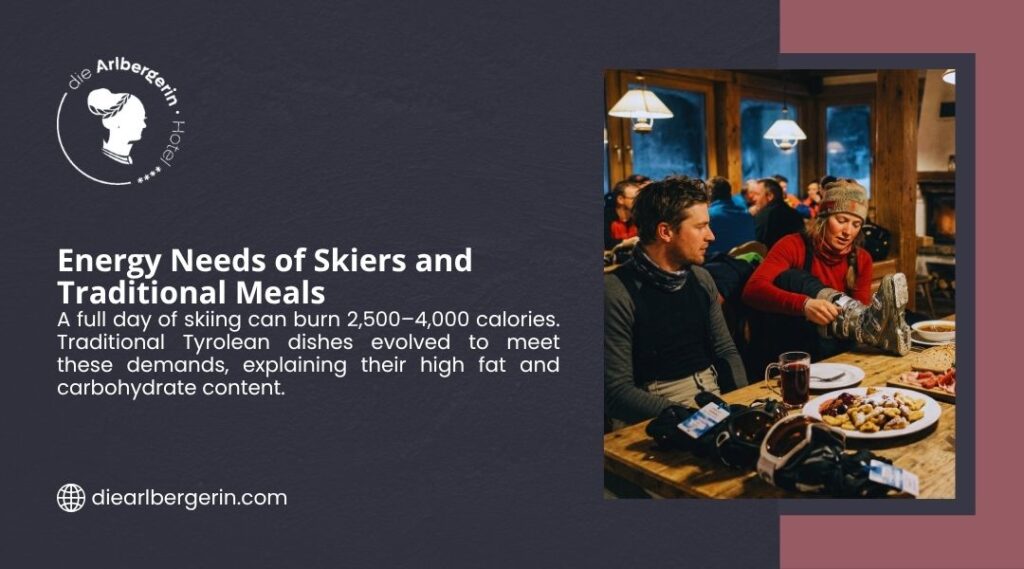
After skiing, for instance, hunger isn’t subtle. It builds gradually, then all at once. That’s when traditional Tyrolean food to try in St. Anton feels most satisfying. Sitting down after hours in the cold, ordering something warm and substantial, it changes how you experience the dish itself.
The same applies in summer, though in a different way. Hiking trails often lead to alpine huts, where meals feel less planned and more spontaneous. You arrive, sit down, and eat what’s available. That unpredictability adds something to the dining experience.
Group travel introduces another layer. Shared tables, longer conversations, and dishes passed around it turns food into part of the social dynamic rather than a separate activity. This becomes especially noticeable during retreats or company trips, where meals anchor the day’s structure.
Even quieter activities follow this pattern. A morning spent exploring or a late afternoon walk often ends with coffee, dessert, or a simple meal. It doesn’t need to be elaborate. The setting does most of the work.
That’s what makes traditional Tyrolean food to try in St. Anton feel different. It isn’t isolated from everything else. It sits right in the middle of the experience.
Where to Stay for the Best Food Experience in St. Anton
Accommodation shapes more than comfort; it quietly influences how you experience food throughout your stay. Staying somewhere with easy access to restaurants makes a noticeable difference. When you don’t have to think about transport or timing, you’re more likely to explore different places, try new dishes, and stay out a bit longer without worrying about logistics.
At the same time, where you stay can also define your first and last meals of the day. Breakfast, in particular, sets the tone. In properties that focus on regional ingredients, even simple options, such as fresh bread, local cheese, and homemade spreads, feel more connected to the area.
This is where places like Die Arlbergerin stand out. The approach isn’t overly formal, but it’s intentional. Food reflects the same philosophy as the stay itself: local, relaxed, and thoughtfully put together. You notice it in small details rather than big statements.
Location also plays a role. Being slightly removed from the busiest parts of St. Anton often creates a calmer atmosphere in the evenings. After a day out, returning somewhere quiet changes how you end the day, especially after heavier meals or long dinners.
For travellers who value both comfort and a consistent dining experience, choosing accommodation that aligns with local food culture tends to make the biggest difference. It removes friction and allows the trip to unfold naturally.
FAQs About Traditional Tyrolean Food to Try in St. Anton
What is the most traditional Tyrolean food to try in St. Anton?
Tiroler Gröstl usually comes up first. It’s simple: potatoes, meat, and onions, but it represents the core of Tyrolean cuisine. Kaiserschmarrn follows closely, especially for those looking for something sweet after a long day.
Is traditional Tyrolean food in St. Anton suitable for vegetarians?
Options exist, though they are more limited compared to meat-based dishes. Cheese dumplings, certain pasta dishes like Schlutzkrapfen, and desserts offer good alternatives.
Where can I try authentic Tyrolean food in St. Anton am Arlberg?
Both mountain huts and local restaurants serve authentic dishes. Places like Ulmer Hütte or smaller traditional kitchens often provide a more original experience compared to highly commercial venues.
Is food expensive in St. Anton?
Prices vary depending on location. Central restaurants and après-ski spots tend to be higher, while quieter areas often offer better value for similar dishes.
What time do people usually eat in St. Anton?
Lunch typically falls between 12:00 and 14:00, especially for skiers. Dinner usually starts around 18:30 and continues into the evening.
Do I need to book restaurants in advance?
During the peak winter season, yes. Popular restaurants fill up quickly, particularly in the evenings.
Why Traditional Tyrolean Food to Try in St. Anton Is More Than Just a Meal
Traditional Tyrolean food to try in St. Anton doesn’t rely on trends or presentation to leave an impression. It stays memorable because it fits naturally into everything else happening around it.
A meal here often reflects the day behind it: cold air, movement, conversations, small moments that don’t feel planned. The food doesn’t interrupt that flow. It supports it. And that’s where the difference lies. It isn’t about finding the best dish or the most popular restaurant. It’s about how everything comes together: place, timing, atmosphere.
For those who want to experience this properly, choosing the right base matters. A stay at Die Arlbergerin brings that balance into one place, where local food, relaxed surroundings, and thoughtful hospitality align without feeling forced.
If you’re planning your visit, it’s worth taking a closer look at their spaces, offers, or simply reaching out through a hotel inquiry in St. Anton to shape the kind of stay where food becomes part of something larger, not just another item on the list.