If you want the short answer, here it is. The Arlberg ski area is usually listed at 300 kilometres of pistes, though some respected sources state 299.7 km and others use 305 km, depending on rounding and classification. Across the wider Ski Arlberg domain, you also see about 200 km of open terrain, powder runs, or ski routes, linked by 85 lifts and cable cars stretching from 1,304 m to 2,811 m above sea level.
How big is the Arlberg ski area total kilometres
So, how big is the Arlberg ski area total kilometres? The cleanest answer is this: Ski Arlberg has about 300 km of marked slopes. There are slight variations in how the resort area is measured, rounded, and presented.
That matters because the search phrase how big is the Arlberg ski area total kilometres sounds simple, but the answer has layers. Some sites count only marked ski runs. Some separate pistes from ski routes. Some round the total for readability. And some tourism pages fold in a broader interpretation of the ski domain. If you are planning a trip to St. Anton am Arlberg, the number you need to remember is still about 300 km, because that is the figure most consistently used by the official entities that run and promote the resort.
The reason this question gets searched so often is easy to understand. Skiers don’t just want a number. They want to know whether Arlberg, Austria, feels huge on snow, whether St. Anton ski resort is the whole thing or just one part of it, and whether the famed terrain around st anton, st christoph, Lech, Zürs, Warth, and schröcken is realistic to cover on one lift pass. That’s where the raw kilometre count stops being a stat and starts becoming useful.
| Piste/slope total | Extra terrain listed | Lifts | Elevation |
| 300 km | 200+ km powder runs | 85 | not stated on this page |
| 300 km | 200 km open terrain | 85 | not stated on this page |
| 299.7 km | not in headline summary | 85 | 1,304 m to 2,811 m |
| 305 km | 200 km ski routes | not highlighted in summary snippet | not highlighted in summary snippet |
The figures above show why the headline varies slightly across the web. The big picture, though, does not change: Arlberg ski is enormous by Alpine standards and is repeatedly described by official sources as Austria’s largest connected ski area.
Why you’ll see 299.7 km, 300 km, or 305 km
Different organisations measure ski areas differently. Some count only groomed pistes. Others include ski routes. Some rounding up for marketing clarity. So when you search how big is the Arlberg ski area total kilometres, you’ll see:
| Figure | Reason |
| 299.7 km | Precise audited measurement |
| 300 km | Rounded official figure |
| 305 km | Includes extended classifications |
That’s not inconsistency, it’s just different measurement standards.
St. Anton ski resort vs Ski Arlberg: clearing the confusion
One of the most common misunderstandings around how big is the Arlberg ski area total kilometres comes from mixing up the St. Anton ski resort with the wider Ski Arlberg network. Here’s how it works:
| Area | Description | Size relevance |
| St. Anton am Arlberg | Core resort with Galzig, Rendl, Valluga | Part of the total |
| St. Christoph & Stuben | Linked sectors | Part of the total |
| Lech Zürs | Premium ski area connected via Flexenbahn | Part of the total |
| Warth & Schröcken | Snow-rich western extension | Part of the total |
So when someone asks how big the Arlberg ski area is in total kilometres, they’re not talking about just the St. Anton ski area, they’re referring to the entire connected domain. And that’s why the number feels so large.
What the Arlberg size looks like on paper
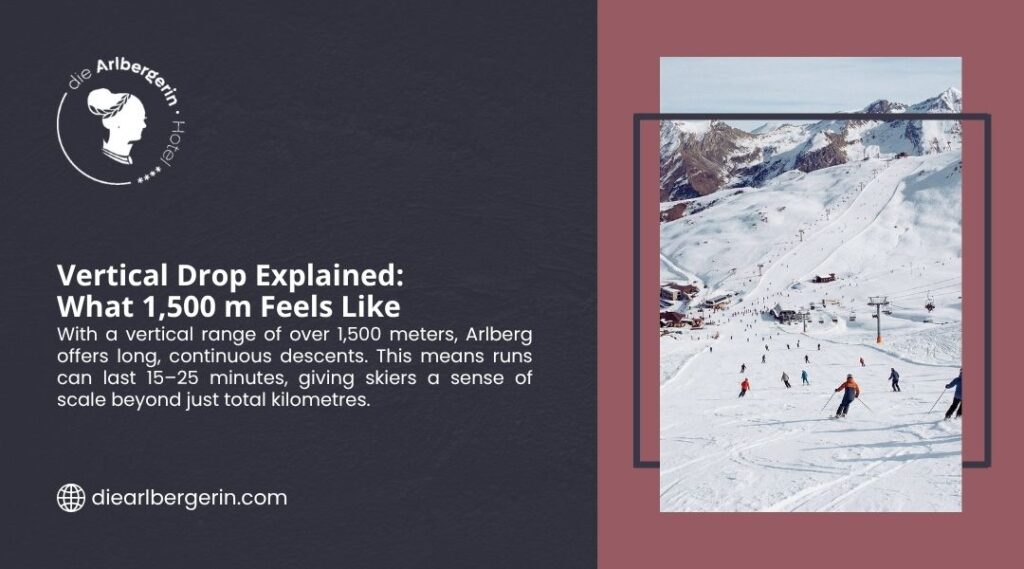
The Arlberg’s scale becomes easier to grasp when you place the headline figures next to each other. The official resort calls it Austria’s largest ski resort and one of the world’s top five, backed by 85 cable cars and lifts, 300 kilometres of slopes, and more than 200 km of powder runs. Ski resort info adds the vertical picture, placing the ski area between 1,304 m and 2,811 m. That means a vertical span of 1,507 m, which is substantial enough to shape both snow reliability and the feel of the terrain.
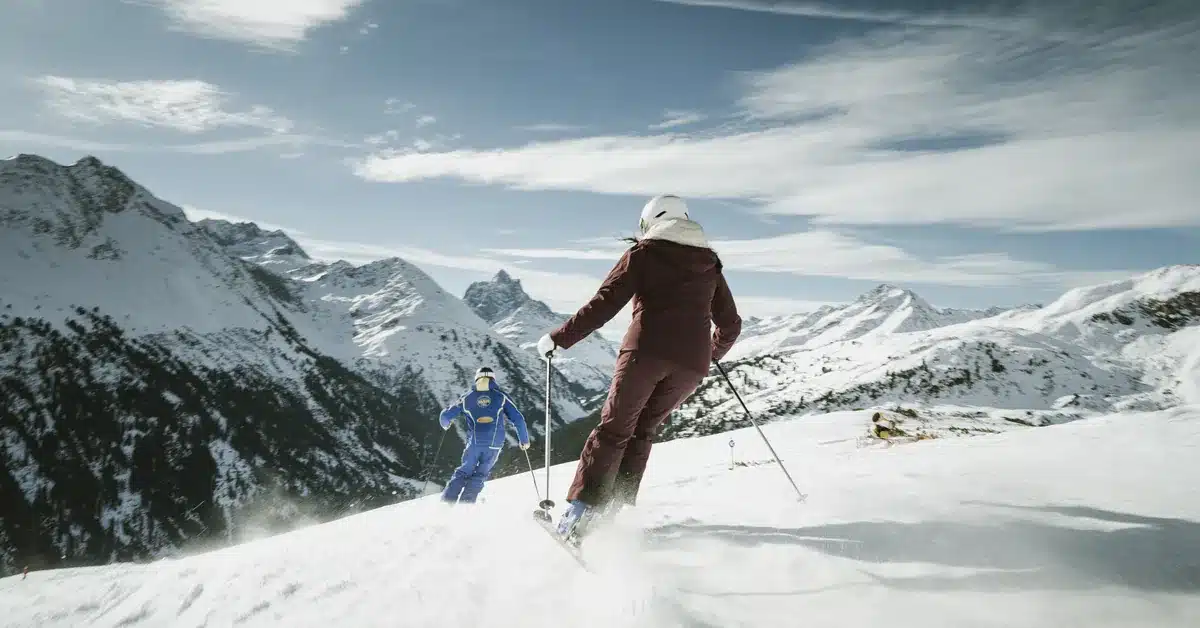
For the skier on the ground, though, raw size only tells half the story. What makes Ski Arlberg, Austria, feel big is not only the total kilometres. It is the spread of sectors, the number of lifts, and the fact that the area offers very different mountain personalities. St anton am Arlberg ski terrain has a reputation for strong, athletic skiing and long descents. The broader Arlberg also gives you scenic traverses, gentler cruising zones, and the kind of mileage that can make a three-day trip feel too short.
How the pistes break down by difficulty
One site gives one of the most useful breakdowns for travellers who want more than a bragging-rights number. It lists 131 km of easy pistes, 123 km of medium pistes, and 51 km of difficult pistes, with 200 km of ski routes shown separately. That is a far more informative picture than a single 300 km badge, because it tells you who the mountain serves best.
What that mix suggests, in plain terms, is a ski area with broad appeal but a clear sporting streak. Beginners are not shut out, far from it, but st anton ski and the wider Arlberg are not famous because they are gentle.
They are famous because the area offers long mileage, technical heritage, and enough variety to keep skilled skiers busy for days. Intermediates get a lot from the mountain because the medium-category share is high. Advanced skiers get the bonus layer of difficult pistes plus the separate route and freeride culture that has long shaped the area’s reputation.
| Terrain category | Distance listed | What it suggests |
| Easy pistes | 131 km | Plenty for steady learners and relaxed mileage days |
| Medium pistes | 123 km | Strong fit for confident intermediates |
| Difficult pistes | 51 km | Serious terrain remains a defining part of the area |
| Ski routes | 200 km | The wilder side of Arlberg adds scale beyond marked pistes |
For a reader comparing the biggest ski resorts in Austria, this matters more than a one-line ranking claim. A large ski area with poor balance can feel repetitive. Arlberg does not. It has enough easy terrain to be accessible, enough medium terrain to be holiday-friendly, and enough hard terrain to preserve its old-school sporting edge.
How big the Arlberg feels when you actually ski it
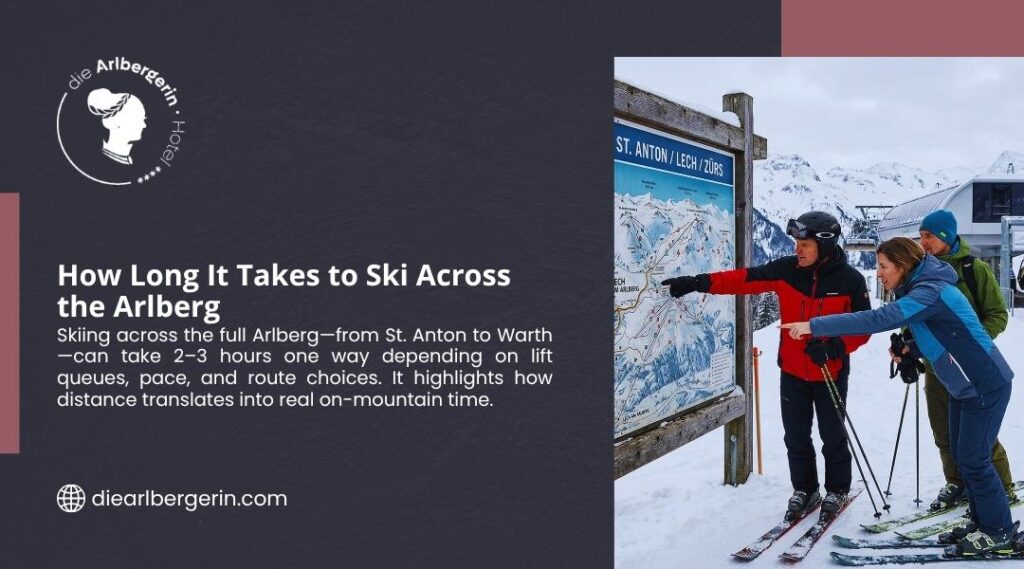
On paper, how big is the Arlberg ski area total kilometres sounds like a statistics question. On snow, it becomes a pacing question. Can you do the Arlberg in a weekend? Not really. Can you sample it well in three or four days from st. Anton Austria? Yes, but you need a plan. The network is large enough that a casual late start and a long lunch can leave whole sectors untouched.
This is where the official interactive map and app become more than nice extras. Ski Arlberg’s live navigation tools help you track open lifts, ski runs, and route options across the wider area. That is useful because a mountain of this size can punish vague planning. A skier based in st anton am Arlberg, Austria, might assume every well-known sector is just around the corner, but the Arlberg’s scale means timing, weather, and lift flow still matter.
And that is the real answer beneath the headline. The Arlberg does not just look big on a st anton ski map. It skis big. There are enough connected sectors, enough lift infrastructure, and enough distinct faces of the mountain that the resort behaves like a serious network, not a single hill with a generous marketing team.
St. Anton as your base within the wider Arlberg
For many visitors, st anton am Arlberg is the smartest base because it offers both brand recognition and real ski convenience. The resort is repeatedly described as the cradle of alpine skiing, and official tourism pages present it as traditional and modern at once, with direct access to one of the Alps’ defining ski domains.
That heritage changes the feel of a trip. A stay in st anton ski resort is not only about lift access. It is also about the culture around the lifts, the mountain history, the village rhythm, and the sense that skiing here still has some bite.
For first-time visitors, that makes practical planning especially useful. If you are planning transfers, knowing how to get from Innsbruck airport to St. Anton am Arlberg can make the journey smoother and more predictable. For groups that include non-skiers, exploring things to do in St. Anton am Arlberg without skiing adds more variety to the overall experience.
Staying local also helps you turn Arlberg’s size into a more relaxed holiday rather than a logistical workout. If you need a stylish base close to the action, these hotel rooms in St. Anton show the sort of setting that suits a ski-focused stay. If you are after seasonal value, current offers in St. Anton are the sensible next step before you book.
Is Arlberg the biggest ski resort in Austria?
Yes, if you’re talking about connected ski areas. Arlberg is widely described as Austria’s largest linked ski region, thanks to its seamless lift network. Other resorts may compete in raw terrain size, but none match its combined piste network. That’s why the biggest ski resorts in Austria list almost always include Arlberg at the top.
Biggest can mean different things. Total marked pistes. Connected lift-linked area. Skiable terrain. Vertical range. Lift count. Arlberg performs strongly on all of them, but the official claim is specifically about being the country’s largest connected ski area. That is the claim you can stand behind with confidence.
What do the total kilometres mean for different kinds of skiers?
For a beginner, the answer to how big is the Arlberg ski area total kilometres is less important than where those kilometres sit and how they are graded. The Arlberg has enough easy terrain to give novices room to progress, but the destination’s reputation has always leaned more toward confident skiers than pure first-timers. The numbers support that impression. There is accessible terrain here, but this is not a place whose entire identity rests on nursery slopes.
For intermediates, the Arlberg might be close to ideal. The medium-piste share is large, the linked geography adds variety, and the lift network opens up the sort of mileage that makes ski holidays in St. Anton attractive for a full week. You can ski a lot here without feeling trapped in the same loop.
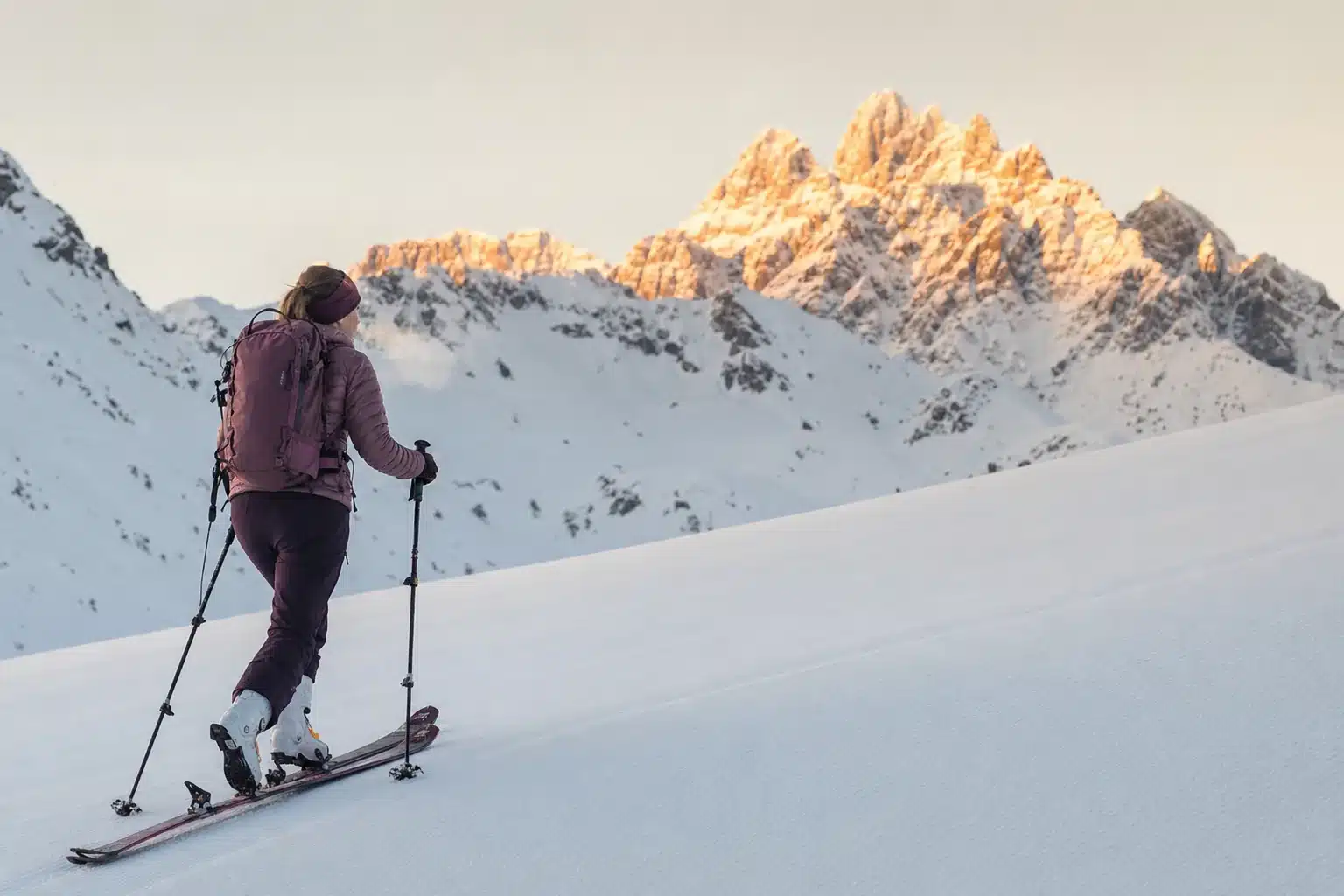
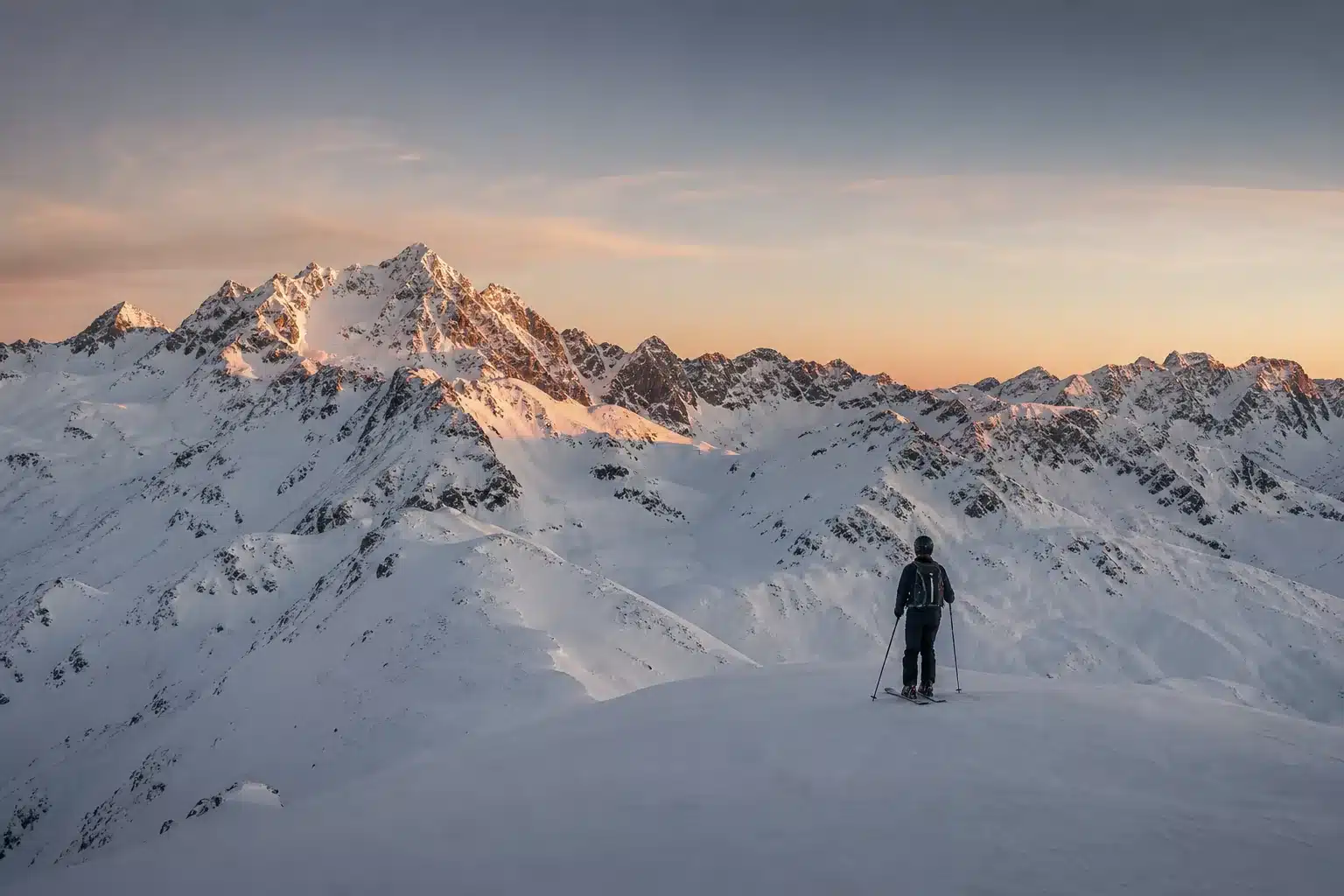
For advanced skiers, the real size of the area is bigger than the piste total alone. The official sites’ references to powder runs, open terrain, and freeride terrain point to the part of the Arlberg myth that never quite fits into a piste map. The resort’s sporting identity is one reason why skiing in St Anton keeps such a strong international following.
For groups, scale matters because it gives people options. Mixed-ability parties do better in large domains where the strong skiers can roam, and the more cautious skiers can still build a good day. If you are travelling with colleagues or friends, these ideas for group activities in St. Anton am Arlberg for company retreats show how the destination works beyond the slopes as well.
The role of lifts, maps, and local logistics
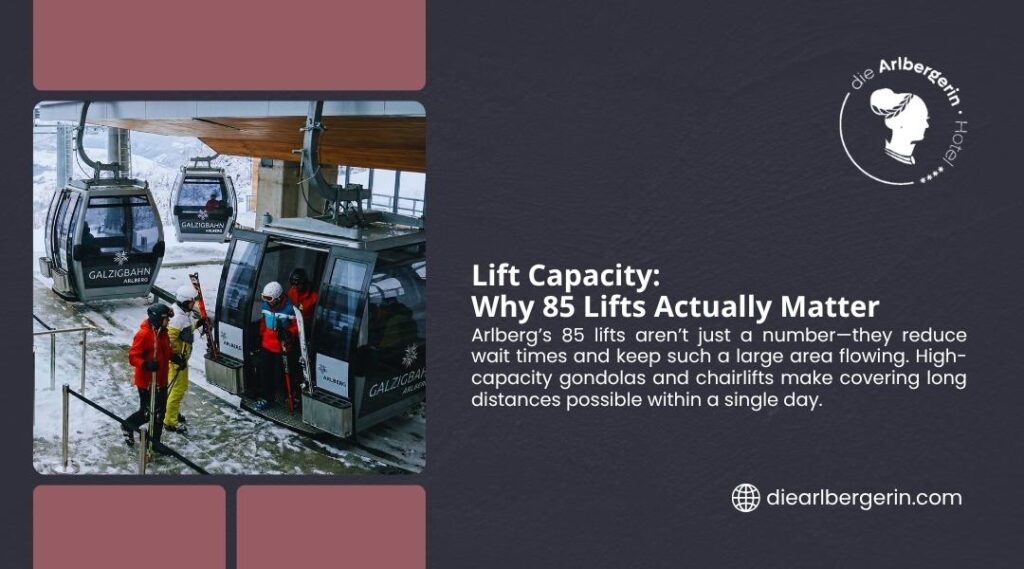
A ski area can post a huge kilometre count and still feel awkward if the lift infrastructure is thin. Arlberg avoids that problem. Both the official resort and tourism sites highlight 85 lifts and cable cars. That much lift support changes the holiday experience because it cuts dead time and makes the size usable rather than merely marketable.
This is one reason the st anton ski map matters so much. On a compact resort, you can improvise. On a domain this broad, a map is part of the ski day, especially if you want to move between sectors without burning time. Ski Arlberg’s own interactive mapping tools are designed around that reality.
If you are building a ski trip around food as much as snow, that broader planning matters too. A long Arlberg day tends to end with a proper appetite, so a stop at Restaurant St. Anton fits naturally into the reader journey. And if you want a stay built around mountain access with character rather than generic resort polish, a closer look at the Hotel in St. Anton makes sense.
Frequently Asked Questions About the Arlberg Ski Area
How many days do you need to ski the entire Arlberg area?
Most skiers need at least 4 to 6 days to explore the key areas of Ski Arlberg. While the answer to how big the Arlberg ski area is in total kilometres gives you the size, covering the entire region in one trip requires careful planning and good weather conditions.
Is the Arlberg ski area suitable for beginners?
Yes, but with some caveats. While St. Anton skiing is known for challenging terrain, areas like Lech Zürs offer more beginner-friendly slopes. The size of the area, highlighted when asking how big the Arlberg ski area is in total kilometres, means there’s terrain for all skill levels, but beginners should choose their base wisely.
What makes the Arlberg ski area unique compared to other resorts?
Arlberg stands out for its combination of size, terrain variety, and connectivity. The seamless link between multiple resorts, high-altitude skiing, and extensive off-piste options makes it more than just large; it’s one of the most diverse ski experiences in Austria.
Conclusion
The best answer is still the simplest one. How big is the Arlberg ski area total kilometres? In practical terms, it is about 300 km of pistes, supported by 85 lifts, spread across the linked Ski Arlberg domain, with roughly 200 km of additional freeride, open terrain, powder runs, or ski routes, depending on the source. But none of those numbers changes the core point: this is one of the most substantial ski domains in Austria and the Alps.
For readers planning a stay in St. Anton am Arlberg, the kilometre count is not just trivia. It tells you that the resort is big enough for a week, varied enough for mixed groups, and serious enough to reward early starts and a bit of route planning. And that, really, is the number that sticks. The Arlberg is not simply large on a fact sheet. It is large in the way it shapes a ski holiday.
If you are ready to turn the research into a real trip, start with the Die Arlbergerin, or, if you are travelling with a larger party, explore the group hotel in St. Anton. That will bring the headline number into focus, because once you are there, how big is the Arlberg ski area total kilometres stops being a search query and becomes the reason one day on the mountain never feels like enough.